
Our Location
304 North Cardinal St.
Dorchester Center, MA 02124

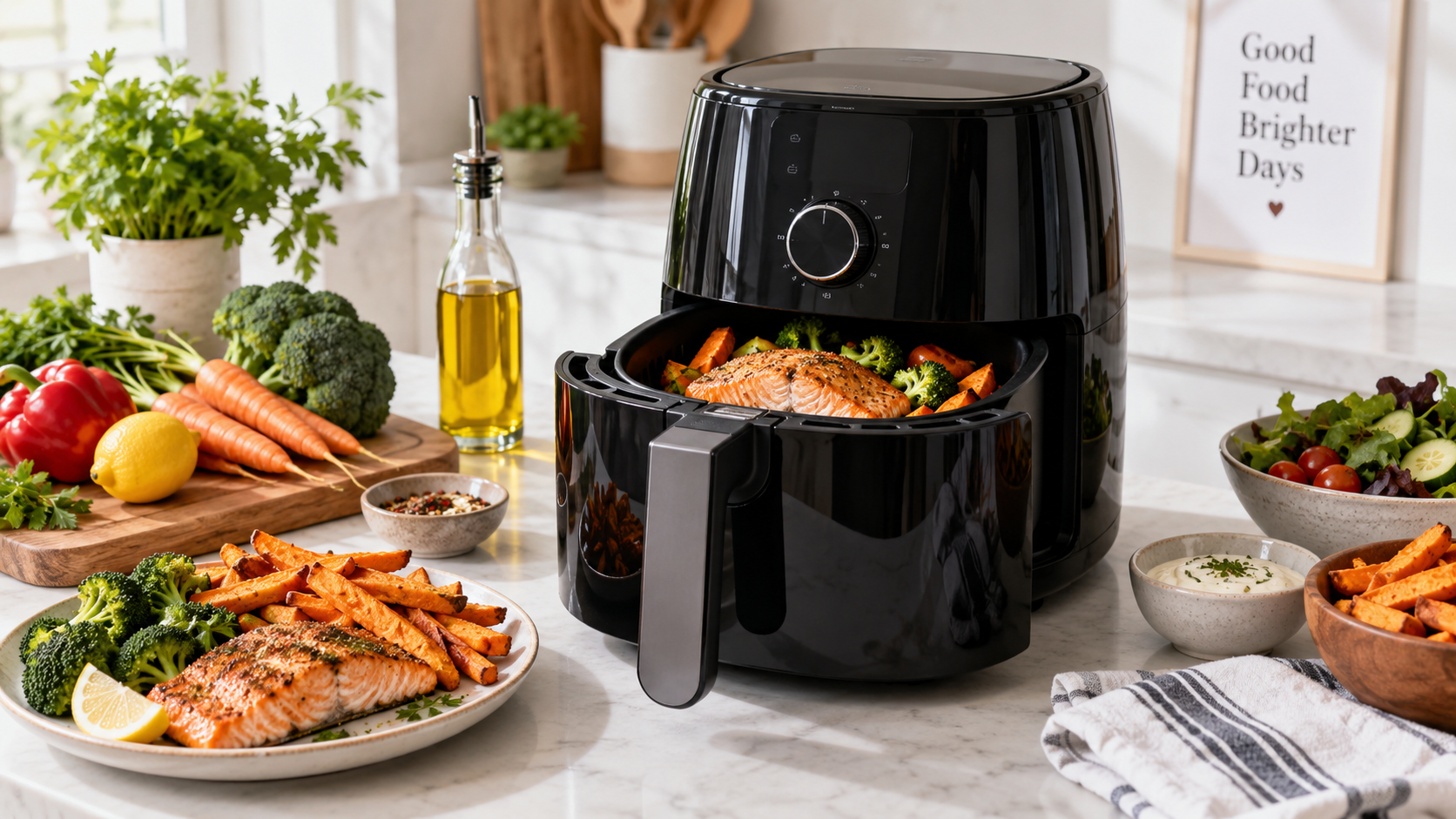
The question are air fryers healthy resolves into a measurement problem, since a 1,500-watt air fryer cooks food with one to two teaspoons of oil instead of three quarts. That oil gap removes 70 to 80 percent of the calories a deep fryer adds, and the fat content of the finished food drops with it.
Air fryers are healthier than deep fryers, since air frying cuts 70 to 80 percent of the calories and about 70 percent of the fat in fried food. Deep frying loads a potato with about 10 percent fat by weight, while air frying leaves roughly 1.2 percent in the same cut of potato.
Air fryer health risks sit on the other side of the same mechanism, because dry heat above 248 degrees forms acrylamide in starchy foods such as potatoes. Cholesterol oxidation products rise in air fried fish, and polycyclic aromatic hydrocarbons appear in the fumes that any high-heat cooking method produces, including air frying.
This article explains the calorie and fat mathematics of air frying, the compounds that form inside the basket, the nutrients that survive the cycle, the foods that suit the appliance, the oil volumes involved, and the settings that keep browning under control.
Healthy describes an air fryer as a cooking method rather than a food, and the appliance earns the label only through the oil volume it removes from a recipe. Nutrition science measures a cooking method by four outputs: added fat, total calories, nutrient retention, and the compounds heat creates inside the food during a single cooking cycle at 375 degrees.
An air fryer scores well on the first two outputs, while its performance on nutrient retention and compound formation depends on the food and the temperature. Separating the appliance from the recipe prevents a false conclusion, since normal use of an air fryer replaces deep frying instead of replacing a steamed vegetable.
Air fryers are healthy compared to deep frying, and the measured difference reaches 70 to 80 percent of the calories that a deep fryer adds to food. Deep frying submerges food in three to four quarts of oil at 350 to 375 degrees, which typically drives oil into every exposed surface of the food it cooks.
That oil carries 120 calories and 14 grams of fat per tablespoon, so a basket dressed with one teaspoon of oil adds about 40 calories to the whole batch. Counting the oil before cooking confirms the saving, and the convection mechanism that cooks food without oil produces the crust that shoppers expect from a basket of deep fried potatoes.
An air fryer cooks food without oil by circulating air at 350 to 400 degrees through a perforated basket, which strips moisture from the outer layer of the food. The dry surface then browns through the Maillard reaction, the same chemistry that gives deep fried food its color and its crust inside a bath of hot oil at 350 degrees.
Convection heat transfers energy more slowly than oil, so an air fryer typically needs 15 to 25 minutes for a batch of fries that a deep fryer finishes in 4. Allowing for the longer cycle prevents undercooked centers, and the time difference separates an air fryer from a deep fryer more clearly than the heat source inside the cooking chamber does.
An air fryer and a deep fryer differ in heat medium, since one moves 400-degree air across a food surface and the other moves 350-degree oil around it. A deep fryer holds three to four quarts of oil and usually reuses it across batches, while an air fryer holds no oil reservoir inside its cooking chamber.
Oil temperature in a deep fryer degrades with each cycle, and the degraded oil can transfer polar compounds and oxidation products into every later batch of food cooked in the same oil. Replacing a deep fryer with an air fryer removes the transfer entirely, which is why a direct comparison of cooking methods reports lower fat at every temperature.
Air fryer cooking methods compare on three attributes: the oil volume a batch needs, the fat retained in the finished food, and the temperature range the appliance covers. Air frying leaves roughly 1.2 percent oil in a finished potato, against about 10 percent for deep frying and 7 percent for pan frying in two tablespoons of vegetable oil.
Pan frying and oven baking generally sit between the two extremes, since a tablespoon of oil spread across a sheet pan still reaches every surface of the food resting on the pan. Reading the oil column first prevents a misreading of the comparison, and oil volume per batch drives every other number in the table.
| Cooking method | Oil used per batch | Fat in finished potatoes | Cooking temperature |
|---|---|---|---|
| Air frying | 1 to 2 teaspoons | About 1.2 percent | 350 to 400 degrees |
| Deep frying | 3 to 4 quarts | About 10 percent | 350 to 375 degrees |
| Oven baking | 1 tablespoon | About 4 percent | 400 to 425 degrees |
| Pan frying | 2 to 3 tablespoons | About 7 percent | 300 to 375 degrees |
Air fryer oil volume per batch runs from zero to two teaspoons, which amounts to 10 milliliters of oil for a basket holding 1.5 pounds of raw vegetables. Oil in an air fryer serves adhesion and browning rather than heat transfer, so one teaspoon distributed by hand outperforms three teaspoons poured straight into the bottom of the basket.
Frozen foods already carry 4 to 8 percent oil from industrial par-frying, and that coating typically supplies enough fat for browning without any oil addition. Checking the package fat content before adding oil prevents a doubled fat load, and the same package lists the temperature range an air fryer should hold for the product.
An air fryer temperature range spans 90 to 450 degrees on most models, while the band that matters for health runs from 350 to 400 degrees. Acrylamide formation typically begins near 248 degrees and accelerates sharply above 350 degrees, which places every air frying cycle inside the formation window.
Lower settings extend cooking time, and a 350-degree cycle running 25 minutes can generate more acrylamide than a 400-degree cycle running 15 minutes on the same potatoes. Matching time to temperature keeps browning light, which protects both the acrylamide load and the fat retained in the finished food at the end of the cycle.
Fat retained in air fryer food measures about 1.2 percent by weight for potatoes, against 10 percent for the same potatoes cooked in a deep fryer. This 70 percent fat reduction removes about 45 calories from every 100 grams of potato, and it holds across every cooking oil a recipe names.
Breaded foods retain more fat than bare vegetables, since breadcrumbs absorb whatever oil reaches them and hold it through the entire cooking cycle inside a hot basket. Weighing the breading before cooking predicts the fat load, and the load converts directly into the calories an air fryer saves against deep frying.
An air fryer saves 70 to 80 percent of the calories a deep fryer adds, which amounts to about 45 calories for every 100 grams of potato. The saving comes entirely from absorbed oil, and one gram of any cooking oil carries nine calories while deep fried potatoes absorb eight to ten grams of oil per 100 grams.
A 150-gram serving of deep fried potatoes can carry about 470 calories, while the same serving from an air fryer basket generally lands near 400 calories. Tracking the calorie gap per serving rather than per meal keeps the comparison honest, and the same arithmetic explains how an air fryer reduces fat in food of every kind.
An air fryer reduces fat in food by 70 to 90 percent against deep frying, and the reduction applies to added fat rather than the fat already inside the food. Chicken thighs hold their own fat at 9 grams per 100 grams, and an air fryer typically renders part of the fat into the drip tray below the basket.
Lean foods show the largest reduction, because a potato contributes 0.one grams of fat before cooking and gains almost nothing beyond a light film inside an air fryer basket. Choosing lean cuts for the basket compounds the fat saving, and the lower fat load raises a second question about the nutrients that survive an air fryer cycle.
An air fryer preserves most nutrients in food, and a 20-minute cycle at 375 degrees retains protein and minerals in full while reducing some vitamin content. Vitamin C and the B vitamins dissolve in water and degrade with heat, so a broccoli floret can lose 15 to 30 percent of its vitamin C content in any high-heat cooking method.
Fat-soluble vitamins A, D, E, and K need dietary fat for absorption, which means a strictly oil-free air fryer meal cannot deliver them as efficiently as a dressed salad. Adding one teaspoon of olive oil restores that absorption pathway, and the same low-oil cycle raises the separate question of whether air frying creates acrylamide.
Air frying creates acrylamide in starchy foods, because asparagine and reducing sugars react above 248 degrees to form the compound inside the browning surface of the food. Acrylamide levels rise with time and temperature, and a dark brown fry can carry several times the acrylamide of a golden fry cut from the same raw potato.
These measurements disagree on the direction of the change, and some tests place air fried potato acrylamide 30 to 40 percent above the deep fried figure. Comparing color rather than cooking method predicts the acrylamide load, and a short list of habits reduces acrylamide in an air fryer without changing the recipe.
Reducing acrylamide in an air fryer depends on three controls: the potato storage temperature, a 15-minute soak before cooking, and the browning level at the end of the cycle. Refrigerated potatoes convert starch into reducing sugars, so a potato stored at 40 degrees can produce more acrylamide than the same potato stored at 50 degrees.
Soaking cut potatoes in water for 15 to 30 minutes leaches surface sugars, and the leaching typically cuts the finished acrylamide load by roughly a third in a finished batch. Pulling the basket at a golden color instead of a brown one limits the compound directly, which answers the broader question of whether air fryers cause cancer.
Air fryers do not cause cancer, and the appliance itself introduces no carcinogen into food beyond the compounds that heat forms in the food during cooking. Acrylamide ranks as a probable human carcinogen on animal evidence, and human dietary studies cannot demonstrate a conclusive link between food acrylamide and cancer rates across large populations of people.
These compounds often appear in toast, roasted coffee, and oven baked potatoes at comparable levels, which places air frying inside the normal range of dry-heat cooking. Treating browning as the variable instead of the appliance keeps the risk in proportion, and a separate compound group forms in the fish an air fryer cooks.
Cholesterol oxidation products are damaged cholesterol molecules, and they form in air fryer fish when hot air reacts with the cholesterol held in the fish tissue. Their concentration in an air fried fillet exceeds the level a steamed fillet carries, which is the one nutritional measure where the appliance performs worse.
Fresh herbs suppress the reaction, and parsley or chives added to the basket typically reduce the oxidation products in a fish fillet by a measurable margin during the same cycle. Adding herbs before the cycle rather than after protects the cholesterol in the fillet, and the same high heat produces PAHs and glycation compounds on other foods.
Air fryers produce polycyclic aromatic hydrocarbons and advanced glycation end products, and both groups form at lower concentrations than a deep fryer or a charcoal grill produces. PAHs form in the smoke that rises when fat drips onto a hot surface, so a drip tray running dry can raise the concentration inside the cooking chamber.
Glycation compounds build when protein and sugar react under dry heat, and tests on fish cakes show fewer of them after air frying them than after deep frying them in the same oil. Emptying the drip tray between batches removes the smoke source, and the lower compound load pairs with a measurable change in blood fat after a meal.
An air fryer changes blood fat after a meal, and a crossover test measured a 67 percent lower triglyceride response against the same meal from a deep fryer. That difference tracked a 74 percent reduction in total meal fat, which moved the post-meal triglyceride curve from 3.8 to 0.9 millimole hours per liter.
Postprandial triglycerides indicate how much fat a meal loads into circulation, and repeated high responses correlate with cardiovascular risk across years of similar high-fat meals eaten several times a week. Holding the meal constant while changing only the cooking method isolates the effect, though an air fryer meal is not automatically healthy on that evidence alone.
Air fryer meals are not automatically healthy, and the appliance changes the cooking fat in a recipe while leaving every other ingredient exactly as it arrived. A breaded chicken nugget cooked in an air fryer carries the same refined flour, sodium, and additives it carried inside the freezer bag it arrived in from the shelf.
Sodium content illustrates the limit, and an air fryer cannot reduce the 400 milligrams of sodium in a 100-gram portion of frozen fries. Reading the ingredient panel before cooking sets a realistic expectation, and the foods that suit an air fryer basket determine whether a meal turns out healthier.
Foods that make an air fryer healthier share one trait: they start with little fat and gain crust from moisture loss instead of from oil absorption. Vegetables, lean protein, and whole potatoes fit that description, while breaded and pre-fried items arrive with 4 to 8 percent oil already bound to the coated surface.
Portion control operates independently of the food choice, and a 1.5-pound basket typically holds four servings of vegetables or two servings of coated protein. Loading the basket to a single layer keeps the crust dry, and vegetables show the effect more clearly than any other food group in an air fryer.
Vegetables in an air fryer need one teaspoon of oil per pound, and the cycle runs 12 to 18 minutes at 375 degrees for dense root vegetables. Water content governs the result, and a courgette holding 95 percent water collapses where a carrot holding 88 percent water browns at the edges and holds its shape.
These leafy vegetables behave differently, so kale dehydrates into a crisp within four minutes and can burn during the sixth minute at the same temperature. Setting a four-minute timer for leaves prevents a burnt batch, and the same single-layer rule governs the lean protein that follows vegetables into the basket.
Lean protein in an air fryer cooks without added oil, and a 6-ounce chicken breast reaches 165 degrees internally after about 18 minutes at 375 degrees. Fat inside the meat migrates during cooking, which typically drains two to four grams from a chicken thigh into the tray and lowers the finished fat content.
Fish behaves as the exception, and a salmon fillet generally gains cholesterol oxidation products in the same cycle that removes fat from a chicken thigh. Reserving the air fryer for lean cuts and vegetables captures the fat saving, while frozen and breaded foods reverse part of it before the cycle begins.
Frozen and breaded foods arrive in an air fryer with 4 to 8 percent oil from industrial par-frying, and that oil remains in the food after cooking. An air fryer still improves the outcome for these products, and the alternative finish is often a deep fryer or an oven tray holding additional oil.
Breadcrumb coatings absorb any oil sprayed into the basket, which can double the fat content of a portion that already carries par-fried oil from the factory. Skipping the spray on pre-oiled foods holds the fat saving, and the oil volume an air fryer genuinely needs depends on which food enters the basket at the start of a cycle.
An air fryer needs zero to two teaspoons of oil per batch, and the volume depends on whether the food carries fat of its own before cooking. Oil performs two jobs inside the basket: it carries seasoning onto the surface and it raises the surface temperature where the moving air contacts the food.
A pump sprayer applies about 0.25 grams per spray, which distributes one teaspoon across a full basket more evenly than a spoon or a pastry brush applies it across a basket. Measuring oil into a sprayer instead of pouring it protects the calorie saving, and the oil chosen for the sprayer has to survive air fryer temperatures.
Oils that suit an air fryer temperature range carry smoke points above 400 degrees, which covers avocado oil at 520 degrees and refined peanut oil at 450. Extra-virgin olive oil smokes at 375 degrees and butter smokes at 302 degrees, so both break down inside a basket running at 400 degrees.
This broken-down oil releases free fatty acids and polar compounds, and those compounds can carry the flavor and the oxidation products a low-oil method exists to avoid. Matching the smoke point to the setting keeps the oil intact, and the resulting calorie profile explains why an air fryer supports weight loss in households that cook fried food every week.
An air fryer supports weight loss indirectly, because removing 45 calories from every 100 grams of fried potato lowers the energy density of a familiar meal. Energy density drives total intake, and a plate at 1.4 calories per gram fills a person on fewer calories than the same plate at 2.2 calories per gram.
Portion size overrides the cooking method, and 300 grams of air fried potatoes deliver more calories than 150 grams of the deep fried version cooked in a conventional deep fryer. Weighing the portion rather than trusting the method keeps the deficit intact, and the limitations of an air fryer follow the same pattern of portion and ingredient.
Air fryer health limitations fall into three groups: the portion the basket encourages, the plant oils a low-fat method removes, and the processed foods the appliance suits. A 6-quart basket holds four servings of fries, and a household cooking one batch for two people typically serves two portions rather than a single portion each.
Those plant oils supply monounsaturated fat and vitamin E, which a strictly oil-free routine removes from the diet along with the frying oil it replaces. Adding one teaspoon of olive oil to a finished vegetable basket restores those fats, and a further limitation sits in the non-stick coating applied to the basket itself.
Air fryer coatings raise a separate health concern, and the PTFE surface on a standard basket stays chemically stable below 500 degrees during normal cooking. Most air fryers cap at 400 or 450 degrees, which keeps the coating 50 to 100 degrees below the temperature where it can begin to degrade and release fumes.
These scratched coatings release particles into food, and those particles pass through the body without absorption, while the exposed aluminum beneath loses its non-stick behavior. Replacing a basket once the coating flakes removes the question entirely, and a short inspection reveals the air fryer habits a household currently has.
Air fryer habits that affect health reduce to three measurements: the oil added per batch, the browning level at the end of the cycle, and the food mix. Each measurement generally takes one cooking cycle to record, and the three together explain most of the difference between a healthy air fryer routine and a neutral one.
None of the three depends on the model, and a 1,500-watt basket unit and a 1,700-watt oven unit respond to oil and browning in the same way across a full cooking cycle. Recording the three numbers across one batch establishes a baseline, and the oil added to an air fryer basket carries the largest single effect of them.
To check the oil added to an air fryer basket, measure the oil into a spoon before cooking instead of pouring it from the bottle over the food. A free pour typically delivers two to three teaspoons where a measured spoon delivers one, and the difference adds 80 to 240 calories to a single batch of fries.
Pre-oiled foods change the reading, and a frozen fry carrying 6 percent oil needs no oil addition at all inside the basket of an air fryer. Logging the measured volume across one week reveals the real oil load, and the browning level on the same batches reveals the acrylamide load.
To check the air fryer browning level, pull one fry from the basket at the end of the cycle and compare its color against a golden reference. Golden indicates a moderate acrylamide load, while deep brown indicates several times that level in the same potato from the same batch of cooked fries.
These edge pieces brown faster than center pieces, and a basket shaken twice during a 20-minute cycle can narrow that spread considerably. Cutting the cycle two minutes short once the edges turn golden controls the compound, and the food mix in the basket decides how much of it forms.
To check the air fryer food mix, list every batch cooked across one week and sort the entries into vegetables, lean protein, and pre-fried packaged foods. A mix weighted toward packaged foods explains a flat health outcome, because the appliance removes cooking oil and cannot remove sodium or refined flour.
A mix weighted toward vegetables and lean protein captures the full 70 percent fat reduction, and it typically lowers the calorie total across a full week of cooked meals. Shifting two batches a week from packaged foods to vegetables changes the outcome, and the appliance chosen for the kitchen either supports that shift or limits it.
Choosing an air fryer for healthier cooking depends on three attributes: the basket capacity, the temperature ceiling, and whether the cooking surface carries a non-stick coating. Capacity above five quarts holds four servings in a single layer, which preserves the dry crust that a crowded basket turns into steamed food instead.
A ceiling of 400 degrees covers every cooking task in this article, while a 450-degree ceiling adds searing capacity and no additional nutritional benefit for most households. Confirming capacity and ceiling before purchase prevents a unit that forces two batches, and a ceramic or stainless surface removes the coating question for households that prefer it.
