Copyright © 2026 Simply Cozy Homes. All Rights Reserved

Air Fryer vs Deep Fryer: Which Is Better & Healthier?
Compare air fryers and deep fryers by cooking results, oil use, convenience, and cost to find which one makes more sense for your kitchen.
ByAlan
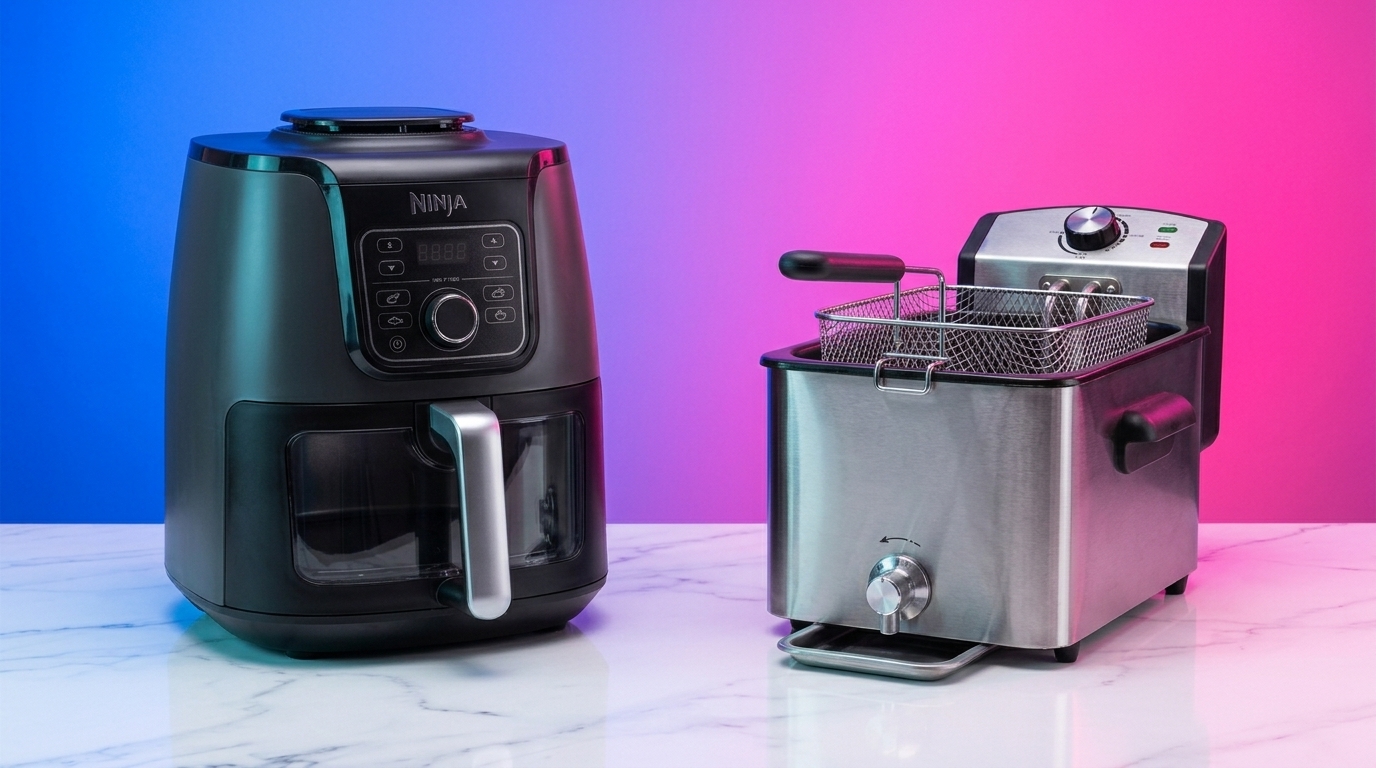
An air fryer is a compact convection oven that blasts superheated air around food, while a deep fryer submerges food in heated oil. That difference shapes everything else: how crisp the surface gets, how much oil you buy, how much food fits, and how many calories end up on the plate. Neither appliance is simply better, because each suits different foods and different kitchens, and the right choice depends on what you actually cook. Think of it as a trade between convenience and tradition.
Air frying approximates frying rather than replicating it. Hot air dries the surface and browns it, but it never fries food in the oil-immersion sense. Dry-coated and frozen foods come out impressively crisp, while wet batters and thick crusts usually disappoint. Deep frying delivers the richer, greasier crunch many people associate with takeout, though it demands large amounts of oil, careful temperature control and more cleanup. Understanding these trade-offs makes the decision much simpler.
What Is the Difference Between an Air Fryer and a Deep Fryer?
The core difference is the heat medium: an air fryer cooks with rapidly circulating hot air, while a deep fryer cooks with food fully immersed in hot oil. Oil transfers heat quickly and evenly to every surface, which is why deep-fried food develops a shattering, oil-saturated crust. Hot air transfers heat less efficiently and relies on airflow to carry moisture away. The practical result is a dry, light crisp from the air fryer and a richer, more uniform crunch from the deep fryer. The table compares the main criteria.
Oil is the biggest everyday contrast. Most air fryer recipes need only a light spray, a tablespoon or two at most, or none at all. Deep fryers need enough oil to cover the food, often several cups, which must be bought, stored, filtered and eventually disposed of. Air fryers also struggle with thick crusts, especially wet batters, which tend to drip through the basket instead of setting. So the choice often comes down to whether your favorite foods are dry-coated or battered.
| Criteria | Air fryer | Deep fryer |
|---|---|---|
| Heat medium | Hot air | Hot oil |
| Oil needed | Little or none | Large volume |
| Texture | Dry crisp | Rich crunch |
| Cleanup | Wash basket | Handle oil |
How Does an Air Fryer Work?
An air fryer works by pairing a heating element with a powerful fan that drives superheated air around the food at high speed. This is convection cooking in a small chamber. The moving air strips moisture from the surface, and the dry, hot exterior then browns through the Maillard reaction, creating the crisp finish. Food sits in a perforated basket or on a rack so air can reach every side rather than only the top. That open airflow is why the machine cooks quickly.
A light spray of oil helps browning, though oil acts more as an ingredient than as a cooking medium here. It carries heat across the surface and adds flavor, which is why even a small amount noticeably improves color on fresh potatoes or vegetables. Overcrowding the basket blocks airflow and leaves food pale and soft, so cooking in smaller batches matters. Racks, perforated pans and strong fan speed all improve crispness by keeping air moving freely.
How Does a Deep Fryer Work?
A deep fryer works by heating a large pool of oil to a set temperature, usually controlled by a thermostat, then submerging food in it. The oil touches every surface at once, so heat transfers fast and evenly. Typical immersion temperatures run about 350-375°F (175-190°C). Water inside the food turns to steam and escapes outward, which keeps oil from soaking in and helps build the crust. That steady outward flow is central to good frying.
Temperature stability is what separates crisp food from greasy food. Dropping cold food into oil lowers its temperature, and the fryer needs time to recover. If the oil stays too cool, food absorbs more of it and turns heavy and soggy. Monitoring the temperature and frying in modest batches helps the oil bounce back between additions. A thermostat takes much of the guesswork out of the process.
Using a deep fryer means heating and managing a large volume of oil, which is the main source of its extra effort. You need to watch the temperature while cooking and keep the area clear of water, which can make hot oil spatter dangerously. Large volumes of hot oil can cause burns or fires if mishandled, so many fryers include safety features such as lids and controlled heating. Those features reduce risk, but they do not remove it.
The work does not end when the food is done. Oil must be cooled before it is handled, then filtered, stored or disposed of. Filtering removes crumbs that would burn and spoil the oil, letting you reuse it for a time. That reuse saves money but adds storage and a cleanup routine that air fryers avoid completely. For people who fry only occasionally, this overhead is often the deciding factor.
Is an Air Fryer Healthier Than a Deep Fryer?
Yes, an air fryer is generally healthier because food absorbs far less oil, which lowers added fat and calories compared with deep frying. Large oil quantities add extra calories in deep frying, while air-fried food reaches a crispy finish with less mess. Studies suggest air frying can cut fat by up to 75% and calories by 70-80% in items like fries and breaded chicken. The size of the saving depends on the food and how it is prepared. Porous or breaded foods that soak up oil show the biggest difference.
Preparation matters. Pre-fried frozen foods already contain oil, so air frying them mainly avoids adding more, while raw battered foods cannot be air fried well at all. Recipes that rely on oil, such as samosas brushed with it, still need some, though far less than a frying pan or fryer. An air fryer is not a health food machine. It improves the fat profile of fried foods but does not turn processed, salty ingredients into nutritious ones. For exact calories, consult nutrition data for the specific food.
Acrylamide, a compound that forms in starchy foods cooked at high temperatures, appears with both methods, and results across studies are mixed. Many report lower levels with air frying, but others find no significant difference, and very high temperatures can raise levels. Duration and temperature drive formation more than the appliance, so avoid over-browning and consider soaking potatoes beforehand. Claims of a definite cancer risk from either method would go beyond the evidence.
| Factor | Air fryer | Deep fryer |
|---|---|---|
| Oil used | 1-2 tablespoons or less | Several cups |
| Added fat | Lower | Higher |
Which Tastes Better: Air-Fried or Deep-Fried Food?
Deep-fried food generally tastes better for most people, offering a richer flavor, an even golden crust and a satisfying, if greasier, mouthfeel. Oil contact browns every surface at once and locks in moisture, which is why deep frying still reigns for pure taste and texture. In one fries comparison, the deep fryer won the taste test, and in another test it won on texture while the air fryer took taste. Results clearly vary with the food and the tester.
Air frying produces a drier, lighter crunch that many people find pleasant, and it avoids the heavy, oily aftertaste of deep frying. It performs best with frozen breaded foods and vegetables, whose dry coatings crisp well in circulating air. Those who dislike greasy food may actually prefer the cleaner flavor. The difference is more about style than about one method being flawed.
The weak spots are wet-battered foods. Batter poured onto food and placed in an air fryer tends to run off or drip through the basket. What remains can stay raw or turn leathery rather than puffing into a crisp shell. If tempura, beer-battered fish or similar dishes are your favorites, the air fryer will disappoint. For dry-coated items, though, the flavor gap narrows considerably.
Air Fryer vs Deep Fryer for Specific Foods
Dry-coated and frozen foods favor the air fryer, while battered or immersion-dependent foods favor the deep fryer. Use the table below as a per-dish selection guide, then adjust for your own preferences on texture and effort.
Frozen chips and fries are the air fryer’s best use case, since they are pre-fried and need only hot airflow to crisp. Tempura, beer-battered fish and Korean fried chicken need hot oil immersion. The pattern is consistent: the more liquid the coating, the more you need oil.
Dry breadcrumbs, seasoned skin and pre-fried coatings set well in moving air, whereas wet batters need immediate contact with hot oil to firm up. Bulky foods also matter, because basket space limits how much an air fryer can handle. The sections below look at popular foods in more detail.
| Food | Better method | Reason |
|---|---|---|
| Frozen fries | Air fryer | Pre-fried, dry |
| Wings | Air fryer | Fat renders away |
| Tempura | Deep fryer | Wet batter |
Fries and Potatoes
Deep frying gives crunchier fries, while air frying gives satisfying, healthier fries that are somewhat less crunchy. Frozen fries are the easiest win for the air fryer, because they are already pre-cooked and just need hot circulating air. Hand-cut potatoes take more effort: peel if you like, slice into even sticks, soak, then dry thoroughly. Drying matters because surface water prevents browning and crisping.
Technique differs between appliances. In a deep fryer, the classic method is a double fry: a first fry to cook the interior, then draining and a second fry at 190°C (370°F) for color and crunch. The air fryer uses a single cook, with the basket shaken periodically so the sticks brown evenly. This makes the air fryer simpler, though it lacks the extra crisping stage. Chips and fries behave similarly in both.
Preparation can lift air-fried results. In one test, potato sticks were blanched in boiling salted water for 3-4 minutes before air frying. Blanching softens the interior, and a thin cornstarch coating can help the exterior crisp. Soaking potatoes beforehand can also lower acrylamide levels with high-heat methods. These steps close part of the gap with deep-fried versions.
In side-by-side comparisons, air-fried fries were satisfying and healthier but less crunchy than deep-fried fries. The deep fryer won the taste test for fries in one comparison, so expect a trade-off between texture and fat. For a weeknight side dish, the air fryer is quicker and cleaner. For a special-occasion batch of proper chips, the deep fryer still earns its place.
Chicken Wings, Nuggets and Fish
Chicken wings are excellent in an air fryer, while nuggets work well if breaded, and fish works only with dry coatings. Wing skin renders and crisps evenly, since fat drips away from the meat and the skin browns all over. The result is crispy skin and a juicy inside, so wings are among the best air fryer foods. Check doneness with a thermometer, because crisp skin can look finished before the meat is cooked through.
Coating type decides the outcome. Dry breadcrumb coatings on nuggets and fish fillets crisp nicely in circulating air. Wet batter cannot be air fried, because it drips off before it sets. Wet-battered chicken and classic battered fish belong in the deep fryer. Choose breaded versions for the air fryer and keep juiciness by avoiding overcooking.
Snacks: Samosas, Spring Rolls, Egg Rolls, Lumpia and Mozzarella Sticks
Filled, wrapped snacks such as samosas, spring rolls, egg rolls, lumpia and mozzarella sticks can be air fried, with slightly drier shells than deep frying. Oil gives deep-fried versions a blistered, bubbly shell, whereas air-fried ones are crisp but plainer. Brushing wrappers lightly with oil improves color and crispness in the air fryer. Indian snacks like samosas especially benefit from this simple step.
Sealing matters more in an air fryer. Strong airflow can open loose edges, causing fillings to burst or cheese to leak. Seal wrappers firmly with water or paste, and for mozzarella sticks chill them well before cooking. Avoid crowding, so the shells brown rather than steam. Deep frying seals edges instantly, which makes it more forgiving.
Tofu works well air fried, becoming firm and crisp outside with little oil, so it needs no deep fryer. Donuts differ: yeast-raised or wet-batter donuts suit oil, which creates their puffed, tender structure. Air fryers can make baked-style donuts, but the result is a different product. Choose according to the texture you want.
Air fryers shine at reheating. Pizza, spring rolls and samosas come back crisp instead of soggy, unlike microwaving. Hot air dries the surface again and restores the crunch. This alone justifies the appliance for many households that regularly have leftovers. A deep fryer is rarely used for reheating.
Turkey and Large Cuts
A whole turkey generally needs a large oil fryer or a turkey-specific appliance, because most air fryers are too small to hold one. Air fryers have smaller capacity than deep fryers, so large groups may require several batches. Cooking in batches works for wings or nuggets but gets impractical for big cuts. Size is the real limit, not the cooking method.
Air fryer oven models can handle small birds or parts such as drumsticks and breasts. Their larger cavities and racks fit bigger pieces than a basket model. Cut the turkey into portions if the whole bird will not fit. This approach also avoids the hazards of large oil volumes.
Deep frying a turkey demands caution. Large volumes of hot oil can cause burns or fires if mishandled. Use a purpose-built fryer, keep it outdoors on a stable surface, and ensure the bird is thoroughly dry before lowering it into oil. Never leave hot oil unattended. For many cooks, portions in an air fryer oven are the safer route.
Which Is Faster and Easier: Cooking Time, Temperature and Cleanup?
The air fryer is usually faster and easier, with 10 to 20 minutes from start to finish, including preheating and cooking. You load the basket, set the time and temperature, and walk away. A deep fryer must first heat a large volume of oil to roughly 350-375°F (175-190°C). Once hot, frying itself is quick, but you must watch the oil. Batch size affects both appliances.
Cleanup shows the biggest gap. Air fryers need the basket washed, while deep fryers leave oil to cool, filter, store or dispose of. Greasy residue and lingering odors add to the work. Filtering lets you reuse oil, but it takes time and storage space. For quick weeknight meals, the air fryer wins.
The table gives a quick comparison of the practical steps. Air fryer capacity is smaller, so larger households may cook in rounds. Deep fryers handle bigger quantities at once, once the oil is ready. Convenience favors the air fryer; volume favors the deep fryer.
| Factor | Air fryer | Deep fryer |
|---|---|---|
| Preheat | Short | Heat large oil volume |
| Cleanup | Wash basket | Filter or dispose oil |
Cost, Energy Use and Safety Compared
Air fryers usually cost more at entry level, about $100, while a deep fryer can cost as little as $25. In the UK, budget air fryers run around £30-50, with premium units at £150-200 or more. Ongoing costs favor the air fryer, since deep fryers need oil purchases and disposal. Oil savings can offset the higher air fryer price over time.
Energy use is hard to compare precisely without specific models. An air fryer heats a smaller space, which generally means it preheats quickly and suits small batches. Deep fryers must heat a large body of oil before cooking begins. Check the wattage on any model you consider, since figures vary between products. Running costs are usually modest either way.
Safety favors the air fryer. A deep fryer holds a large volume of hot oil, which brings the risk of burns, spills and fires if it is mishandled. Air fryers have hot surfaces and release steam when opened, but they have no pool of boiling oil. Auto-shutoff and similar features are common on both types. Households with children will appreciate the lower risk of the air fryer.
Can an Air Fryer Replace a Deep Fryer?
Yes, an air fryer can replace a deep fryer for most home cooks, especially for frozen and dry-coated foods. It cannot handle wet batter, tempura or doughnuts, which depend on full oil immersion, and dishes needing submersion may not succeed. If those are rare in your kitchen, the replacement is practical. Most everyday fried favorites work fine in circulating air.
Air fryers also add versatility, with baking, roasting and grilling functions in addition to frying. Multi-cook ovens extend this further, so one appliance can cover many weeknight meals. Owning both is optional rather than necessary. Keep a deep fryer only if battered dishes are a regular part of your cooking.
Which Should You Buy?
Buy an air fryer if you cook for yourself or your family regularly, and a deep fryer if you often make battered dishes. Consider household size, health goals, storage space, food preferences and how often you fry. An air fryer handles about 90% of day-to-day cooking, while a deep fryer suits occasional dishes. Occasional use makes a deep fryer hard to justify given storage, oil and cleanup.
Pick an air fryer if you want quick meals, less oil, easy cleanup and versatility. Pick a deep fryer if you love tempura, beer-battered fish or Korean fried chicken, or need to cook large batches. Commercial kitchens and menu-driven businesses have different needs, since consistent immersion frying and volume often matter more. The table recaps the pros and cons.
For most home kitchens, the air fryer is the more practical purchase. It saves oil, space and effort, and it handles reheating, roasting and baking too. A deep fryer remains worthwhile for dedicated fans of authentic fried textures. Choose according to the foods you actually cook, not the ones you only imagine making.
| Appliance | Pros | Cons |
|---|---|---|
| Air fryer | Less oil, versatile | Small capacity, no wet batter |
| Deep fryer | Rich crunch, batters | Oil, cleanup, risk |
