Copyright © 2026 Simply Cozy Homes. All Rights Reserved

Basket Air Fryers: How They Work and Who They’re Best For
Understand how basket air fryers circulate hot air, what sets them apart from other designs, and which cooking needs they handle best.
ByAlan
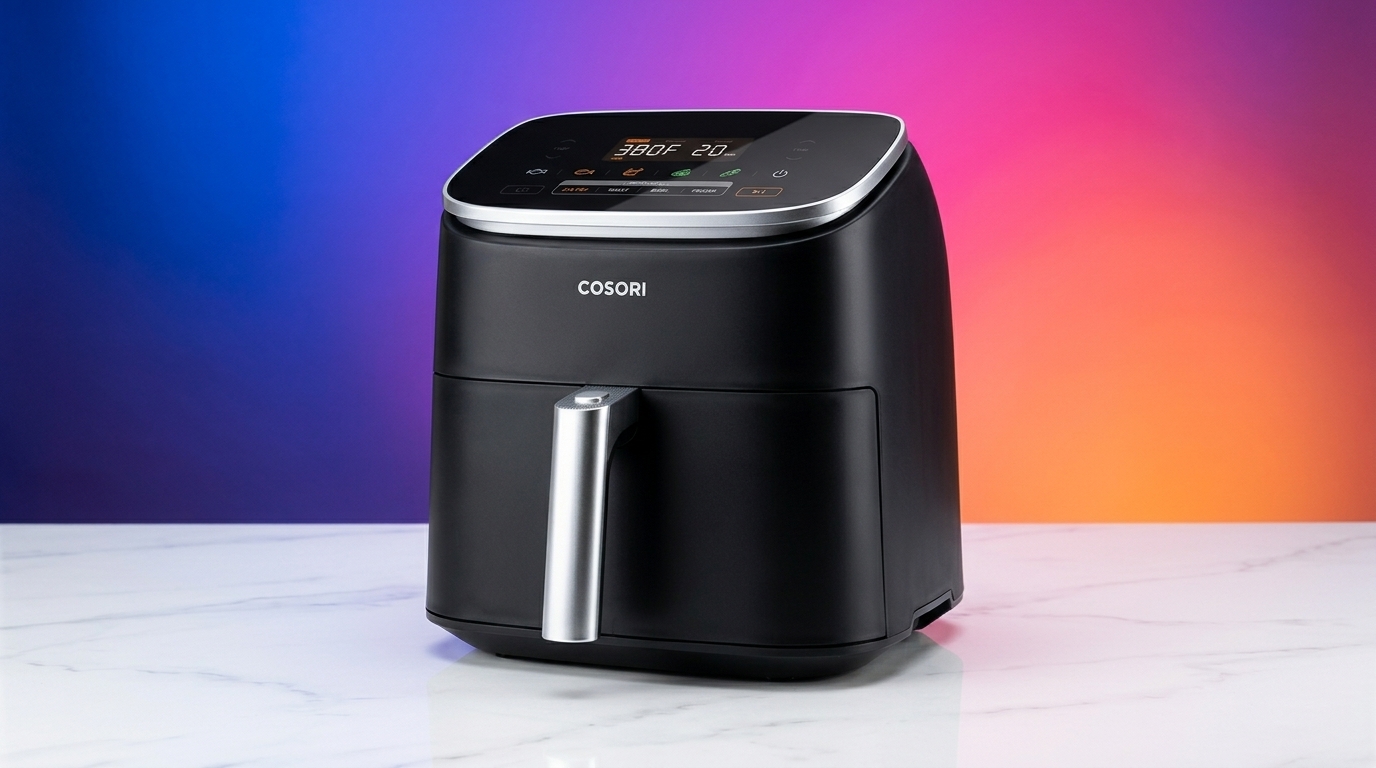
Basket air fryers are compact, cylindrical countertop appliances with a pull-out drawer and a perforated basket. They work like small convection ovens, not traditional fryers. A heating element and fan push rapidly circulating hot air through a small space, so food cooks quickly and browns well without sitting in oil. Most hold roughly 2 to 6 quarts, which makes them the most common and affordable type, and a natural fit for one or two people. The trade-off is clear: you get exceptionally crispy results and a small footprint, but you give up capacity and versatility.
In practice, that means a basket air fryer excels at snacks, frozen foods and small meals, and it often reaches 400°F within minutes. Fries, chicken wings and vegetables benefit most from this concentrated, high-heat airflow, which crisps the surface while the inside cooks through. Larger jobs are harder, because the compact chamber cannot take whole chickens or several trays, and the basket usually needs a manual shake partway through. Knowing those strengths and limits helps you decide whether this style suits your kitchen or whether a bigger, multifunction appliance fits better.On this page
What Is a Basket Air Fryer?
A basket air fryer is a countertop cooker built around a pull-out drawer that holds a removable, perforated basket. Inside the unit, a heating element and a fan work together. The element often sits in the top of the unit, with a high-speed fan directly above it, pushing hot air downward and around the food. Basket-style and oven-style are the two main design categories, and the basket version is the compact, cylindrical one most people picture when they hear air fryer. Single-basket and dual-basket models share the same principle, though dual units add split cooking zones so two foods can cook at the same time.
Knowing the parts helps you understand how the appliance behaves and how to care for it. The main components are: The drawer slides out from the main body and catches grease, while the basket sits inside it and lifts food so air can reach every surface. Because the basket is removable, you can shake it, carry it to the sink and wash it without handling the heating components. That simple structure is also why basket models are generally considered easy to use, with fewer settings and features than oven-style units.
- Pull-out drawer
- Removable perforated basket
- Heating element
- High-speed fan
How Does a Basket Air Fryer Cook Food?
A basket air fryer cooks by blowing concentrated hot air through the basket perforations so it reaches food from all sides at once. The heating element sits close to the food, which keeps the airflow intense and produces the dry, crisp surface people expect from frying. Preheating usually takes about two to five minutes, and many units reach 400°F in that time, so the appliance is ready far sooner than a full-size oven. Because the chamber is small, heat is concentrated around the food instead of filling a large cavity, which speeds up cooking.
Even browning depends on a little help from you. The basket pulls out like a drawer, so you can shake the food partway through the cook. Shaking redistributes pieces that were pressed together or resting on the basket surface, which exposes new sides to the moving air. There is a cost to checking, though: opening the drawer lets heat escape and slows cooking, so frequent peeking can stretch the total time. A single well-timed shake is usually enough to balance browning without losing much heat, especially for fries, wings and chopped vegetables.
Basket Air Fryer Sizes and Capacity
Basket air fryers typically range from 2 to 6 quarts, a span that suits cooking for one or two people. Larger or smaller models exist, but this range covers the most common and affordable options, and it keeps the appliance compact enough for everyday counters. The numbers on the box only tell part of the story, because usable space depends on the shape of the basket as much as its listed volume. Two examples show how different the footprints can be, as the table below illustrates.
The PowerXL basket model offers 5 quarts of capacity with a 9 inch basket diameter, and that diameter limits how much food fits in one layer. Flat items such as breaded cutlets or a handful of fries spread across the base, so width often matters more than the quart rating. At the small end, the Dash Tasti-Crisp DCAF260 has a measured capacity of 2.4 quarts, with an overall footprint under one square foot. That makes it easy to tuck into a tight kitchen, but it clearly suits single portions or a small snack rather than a family dinner.
When comparing sizes, look at the basket dimensions and the counter space you can spare, not only the quart figure. Height matters for whole foods or pans, while width matters for pieces that need to lie flat in a single layer. A compact unit leaves more room for other appliances, but it also means batch cooking if you feed more than a couple of people. Matching these measurements to the foods you cook most often prevents the common mistake of buying a unit that looks big but cooks small.
| Model | Capacity | Detail |
|---|---|---|
| PowerXL | 5 qt | 9 in basket |
| Dash DCAF260 | 2.4 qt | Under 1 sq ft |
Which Basket Air Fryer Size Should You Choose?
Choose your basket air fryer size by weighing household size, counter space, the foods you cook most and how often you need batches. For one or two people, the typical 2 to 6 quart range is usually enough, and smaller units save space in cramped kitchens. Larger families will find a single compact basket limiting, since each load only feeds a few people at a time. Thinking through a typical meal, rather than the biggest thing you might ever cook, gives the most realistic guide.
A single large basket suits one protein, one tray of vegetables or a snack, because everything shares the same temperature and timing. That simplicity is a strength when you cook one item at a time, such as a batch of wings or a portion of fries. It becomes awkward when a meal has several components, since foods needing different settings must be added at different times or cooked in batches. Staggering additions works, but it takes attention and can leave the first items cooling while the rest finish.
Dual baskets solve that problem by splitting the cooking space into two zones, so two foods can follow their own settings. This helps when you want a protein and a side to finish together, or when two people want different dishes. The trade-off is a larger body, which takes up more counter space than a single compact basket and may defeat the point of buying small. If you rarely cook more than one item, a single basket is usually the more practical and space-friendly choice.
Counter space deserves as much attention as capacity, because an appliance that does not fit comfortably tends to be stored away and rarely used. Measure the spot where it will live, including clearance above and behind the unit, and check the dimensions rather than relying on the quart number. Also consider the food shapes you cook: width limits flat pieces, while height limits whole items or pans. Weighing these points together should point you toward a size you will actually use several times a week.
Advantages of Basket Air Fryers
The main advantage of a basket air fryer is exceptionally crispy food from concentrated airflow, with a small footprint and quick preheat. It is often described as the best appliance for pre-fried frozen foods, which turn out exceptionally crisp, and it re-crisps leftovers that a microwave leaves soggy and rubbery. Fries, chicken wings and vegetables are especially well suited, since high heat and moving air brown them evenly when they are shaken midway. The key benefits are listed here.
Speed is another practical gain. A larger oven chamber can take longer to heat and recover, while a basket warms up fast for small loads. That makes it handy for a quick snack or a weeknight side when turning on a full oven feels like too much effort. Cleanup is also simple, since the removable basket and drawer can be taken to the sink without fuss. Together, these traits explain why the basket style has become the everyday choice for people who mainly want crisp results in a compact package.
- Very crisp results
- Small footprint
- Quick preheat
- Easy cleanup
Limitations and Downsides of Basket Air Fryers
Limited capacity is the most notable downside of basket air fryers. The small cooking chamber cannot hold items like whole chickens or multiple trays of food. The basket shape also makes it hard to cook a single flat layer, such as a pizza or a full rack of toast. Stacking meat or vegetables to fit more in leads to uneven cooking, because air cannot reach the pieces buried in the middle. The main drawbacks are summarized below.
Visibility is another weakness. Most models lack a viewing window, so checking progress means pulling the basket out, which releases heat. Each check slows the cook slightly, and the effect is more noticeable in a small chamber where temperature drops quickly. Some basket models do include a window, which helps, but they are the exception rather than the norm. If you like to watch browning, that feature is worth looking for.
Versatility is the third limit. Basket units focus primarily on air frying and generally lack baking, broiling or toasting functions. They also need manual intervention, since food must be shaken partway through to brown evenly. If you want one appliance to replace a toaster or small oven, a basket model will feel restrictive. For buyers who simply want crisp food from a compact machine, though, these limits are often an acceptable price for the simplicity.
- Limited capacity
- Poor for flat layers
- Rarely has a window
- Air frying only
Basket vs Oven-Style Air Fryers
Basket air fryers are crisper and more compact, while oven-style models offer more capacity, trays and cooking functions. Oven-style units take up about 50% more counter space on average than basket units. Their capacity ranges from 5 to 30 quarts, averaging around 18 quarts, and they offer more multi-functionality, including baking, broiling and toasting. Cosori makes both styles, which gives a useful measured comparison: its basket model is 14.3 in wide and 11.8 in deep. Its oven-style model is 16.9 in wide and 16.3 in deep, so the larger design clearly demands more room.
Window availability and cleanup also differ. Most basket models lack a viewing window, though some include one, while oven-style units generally make it easier to watch food. Basket units concentrate heat in a small space for strong crisping, whereas oven-style chambers are larger and can take longer to heat and recover. Oven-style models suit bigger households and varied cooking, and some are large enough to rotisserie a whole chicken. Basket models suit people who prioritize crispness, simplicity and a small footprint over sheer volume.
| Criterion | Basket | Oven-style |
|---|---|---|
| Capacity | 2-6 qt | 5-30 qt |
| Functions | Air fry | Bake, broil, toast |
Basket Air Fryer vs Toaster Oven: Which Is Better?
Choose a basket air fryer if you mainly want fast, crisp results in a small space, and a toaster oven if you need toasting, baking and roasting. The decision comes down to how much food you cook at once and how many functions you want from a single appliance. Toaster ovens handle larger volumes and varied tasks, while a basket unit focuses on air frying. Think about your usual meals before deciding which strengths matter more.
Footprint favors the basket. Cylindrical basket fryers take up less counter space than toaster oven styles, which helps in small kitchens. Toaster ovens that air fry add that function to toasting, baking and roasting, giving more versatility in one box. Performance is where the gap shows: only a handful of toaster ovens air fry as quickly or as well as a dedicated air fryer. If crispness and speed are your priorities, the basket style usually delivers more reliably.
Your existing equipment matters too. If you only want an air fryer and already own a toaster, a basket model avoids duplicating functions. If you have no toaster or small oven and cook for several people, a toaster oven with an air fry setting may serve better. Neither is universally superior; each fits a different kitchen and cooking habit. Match the appliance to the foods you cook most often, and the better choice becomes clear.
Who Are Basket Air Fryers Best For?
Basket air fryers are best for people who cook snacks, frozen foods and small meals for one or two people. Their small footprint suits space-saving kitchens and compact countertops, and they are ideal if you want crisp results without heating a full oven. Choose a basket style if you only want an air fryer and already own a toaster. The groups that benefit most are listed here.
Dual-basket units are a middle ground for families cooking different items at once, and they also suit single people cooking small batches. Two zones let you prepare a protein and a side with separate settings, which solves the main coordination problem of a single basket. They do take more counter space than a compact single-basket model, so check that the size fits your kitchen. For many households, this style balances flexibility and simplicity.
Some cooks should look elsewhere. Large families, bakers and anyone wanting one multifunction appliance will find a basket model limiting. Oven-style units offer greater capacity, and some are large enough to rotisserie a whole chicken. They also add baking, broiling and toasting, which a basket unit generally lacks. If your cooking goes beyond crisping, an oven-style or toaster oven design is likely the better investment.
- Snack and frozen-food cooks
- Small households
- Space-saving kitchens
- Families, via dual baskets
How to Use a Basket Air Fryer for Best Results
To get the best results from a basket air fryer, follow these steps in order, adjusting for the food you are cooking. Preheat first so the chamber is hot, then arrange food in one layer, which lets air reach every surface. Lightly oil the food, then check progress midway and shake the basket so browning stays even. Following this routine helps avoid pale, uneven results.
Choose foods that suit the basket. Chicken wings, chicken breast, fries and vegetables work well, while width limits flat pieces. Height limits whole items or pans, so check that your food fits before loading the drawer. Manual shaking partway through is needed for even results, and it matters most for small pieces that tend to cluster together. Larger cuts may need turning instead of shaking, depending on their shape.
Avoid the common mistakes that undermine crispness: overfilling the basket, skipping shakes and using liners that block airflow. Overcrowding stacks food so air cannot circulate, which causes uneven cooking. Pulling the basket out releases heat and slows cooking, so limit checks to one or two. If you use a liner, make sure it leaves the perforations open so air can still move freely.
- Preheat the unit.
- Arrange food in one layer.
- Lightly oil the food.
- Check and shake midway.
Are Basket Air Fryers Healthy and Safe?
Basket air fryers are generally a lighter option than frying because they use significantly less oil than deep frying and pan frying. That reduction can lower the fat added to food, which is the main health appeal of the appliance. Safety in normal use is also straightforward, since the heating element is enclosed and the drawer holds the food. Still, healthfulness depends on more than the cooking method.
The foods you choose matter most. An air fryer does not remove saturated or trans fats already present in the food. A breaded, processed item stays that way after air frying, even if it uses less added oil. Vegetables, lean proteins and lightly oiled potatoes make the most of the appliance. Treating it as a cooking tool, not a health fix, keeps expectations realistic.
Materials are another consideration. Many baskets have nonstick coatings, while others use stainless steel or glass. If coatings concern you, check the details of the model, since glass units may still have a nonstick rack. Gentle cleaning also protects coatings from wear, which keeps them in good condition. Reading the product description carefully helps you choose a basket material that matches your preferences.
How to Clean a Basket Air Fryer
Clean a basket air fryer by emptying the grease, washing the basket and tray with soap and water, and letting everything dry completely. Grease drips into the bottom of the drawer, so empty it after cooking, once the unit has cooled. Put the basket or tray in the dishwasher only if the manufacturer recommends it. The steps below cover the routine.
Gentle cleaning protects nonstick basket coatings, so avoid harsh scrubbing that could wear the surface. Soap and warm water usually remove grease without trouble, particularly if you wash soon after cooking. The removable basket and drawer make cleanup simple, and that ease is one of the appliance’s practical strengths. Regular washing also prevents buildup that could affect later cooking.
Drying matters as much as washing. Let all pieces dry completely before returning them to the air fryer. Trapped moisture can cause problems when the unit is next heated. If you use liners, check them against airflow limits so they do not block the perforations during cooking. A quick wash after each use keeps the appliance in good shape.
- Cool and empty the grease.
- Wash basket and tray with soap and water.
- Dishwasher only if recommended.
- Dry all parts completely.
What to Look for When Buying a Basket Air Fryer
When buying a basket air fryer, compare capacity, single versus dual baskets, basket material, window, controls, wattage, preheat time and ease of cleaning. Also consider replacement parts availability and price tiers, since a basket or tray may eventually need replacing. Basket-style air fryers are generally the easiest to use, with fewer features, so simple controls may be all you need. The key criteria are listed here.
Brand trade-offs are worth weighing. Ninja, Cosori, T-Fal and PowerXL are popular basket brands, and Cuisinart and Philips also offer options. Compare models within your budget on the criteria above rather than relying on a name alone. A smaller unit saves space, while a dual-basket model adds flexibility at the cost of a larger footprint. Prioritize the features that match how you cook, and the right model should stand out.
- Capacity and basket count
- Material and window
- Controls, wattage, preheat
- Cleaning and replacement parts
