
Our Location
304 North Cardinal St.
Dorchester Center, MA 02124

Discover whether an air fryer is worth the money, what it does better than a conventional oven, where it falls short, and who benefits most from owning one.
 ByAlan
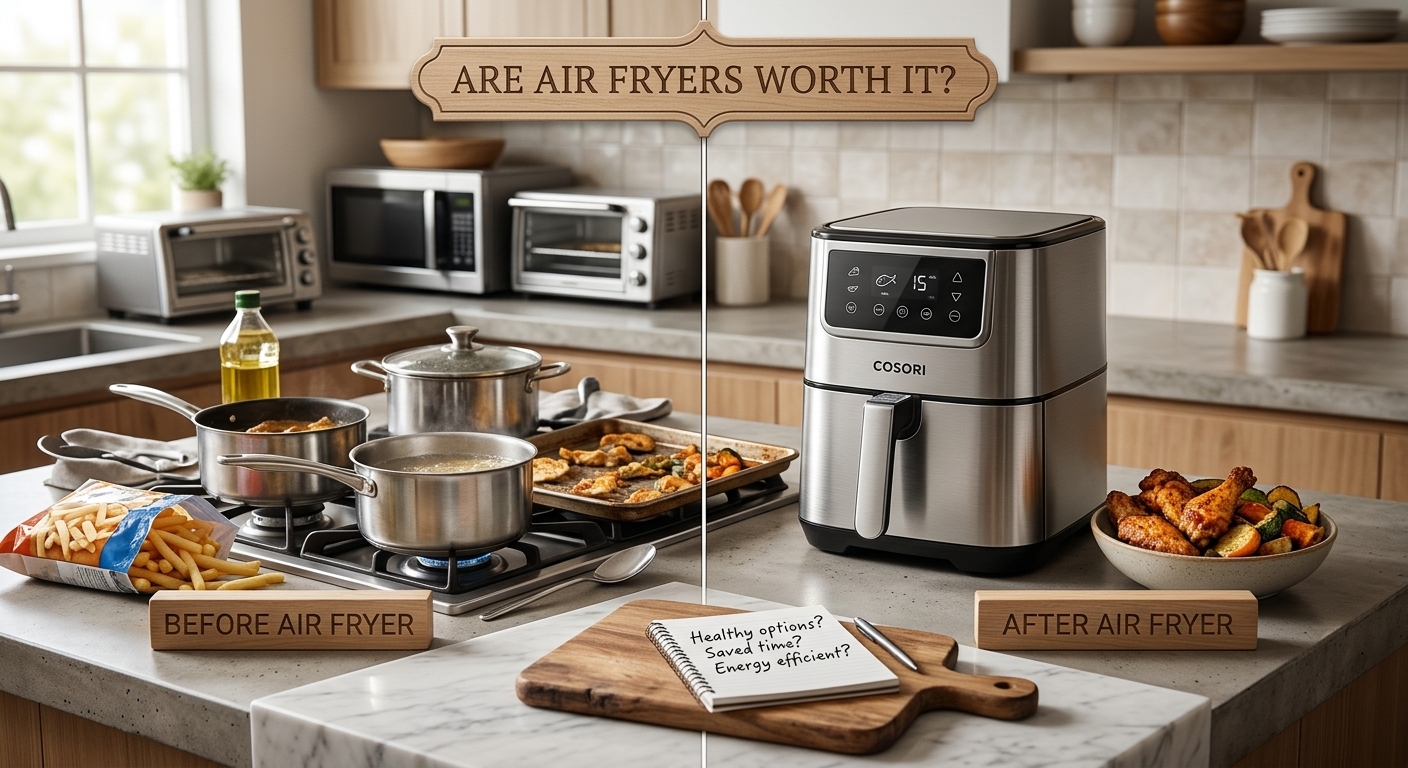
Air fryers are generally worth it for households of one to four people who often cook small batches of crispy, frozen or reheated food. They preheat quickly, crisp the outside of food with little oil, and use less energy than a full-size oven for modest portions. Those gains are real, but they come with trade-offs in capacity and counter space that matter more in some kitchens than others. The value depends on how you cook, not on the appliance’s popularity.
The practical payoff is easiest to see in everyday routines: a weeknight dinner for two, leftover pizza, frozen nuggets, or a tray of vegetables. Cooking times for small batches can run 30-40% shorter than in a conventional oven, and the kitchen stays cooler in warm months. Compared with deep frying, the same style of food can use up to 80% less fat, without a pot of hot oil to dispose of. Those benefits add up quickly for people who use the machine several times a week.
An air fryer is best treated as a specialized tool for speed and texture, not a full replacement for traditional cooking. Large families run into the small basket, and anyone who already relies on a good convection or toaster oven may notice only marginal improvement. Nonstick coatings can wear down over time, and the machine needs dedicated space on the counter. Weighing those limits against your habits is how you decide whether it earns its place.
Yes, for most small households that cook small batches, and no for big-batch cooks, devoted convection oven users, or kitchens without spare counter space. The deciding variables are household size, cooking habits, the appliances you already own, and how much room you have. If one batch equals one meal, the machine shines. If you regularly feed five or more people, the basket becomes a bottleneck. The table below turns those variables into quick verdicts.
Frequency of use is the simplest test. An appliance you reach for several times a week repays its cost through saved time, lower energy use and better texture. One that sits in a cupboard after the first month does not, however good its specifications look on paper. Someone who already loves a quality convection oven should expect a smaller upgrade, since the cooking method is similar and only the speed changes. Think about what you cook on a normal Tuesday, rather than on holidays.
| Your situation | Worth it? |
|---|---|
| 1-4 people, small batches | Yes |
| 5+ people, big batches | No |
| Loyal convection oven user | Probably not |
An air fryer is essentially a small countertop convection oven: a heating element, often an electric coil, plus a fast fan that circulates hot air around the food. Moving air strips moisture from the surface and browns it quickly, producing a crisp exterior with little or no oil. That is why the results resemble frying without a pot of oil, even though nothing is actually submerged. Understanding this mechanism also explains why some foods work well and others do not.
The chamber is much smaller than a standard oven cavity, so it heats up fast and wastes less energy warming empty space. That compact size is the source of the speed advantage, because hot air reaches the food almost immediately and cooking times drop. Fewer cubic inches to heat also means the kitchen stays cooler, which is a practical benefit in summer. Speed and efficiency are therefore built into the design rather than added features.
The same small chamber sets the capacity ceiling, which is the main link between how air fryers work and whether they are good value. Food needs space for air to move around it, so a crowded basket cooks unevenly and loses its crispness. A machine that excels at one or two portions can struggle with a family dinner. Value therefore depends on matching the chamber size to the amount you actually cook.
The advantages that hold up in daily use are speed, lower energy use, better texture, strong reheating and simpler cleanup than deep frying. Each one is most noticeable with small portions, which is where the compact chamber performs best. Reheating leftovers and cooking frozen food are the uses people tend to keep returning to long after the novelty fades. Together they make the machine a practical weekday tool rather than a gadget.
Which benefits matter most depends on your cooking habits and household size. A single person may value low energy per meal and small portions. A couple may care most about fast weeknight dinners, while someone in a hot climate may value a kitchen that stays cool. Those who cook mostly from scratch in large pots will see fewer gains than people who rely on frozen or reheated food. The subsections below look at each benefit in turn and where it has limits.
Yes, for small batches. An air fryer cooks roughly 30-40% faster than a conventional oven, mainly because it preheats in about 3 minutes rather than 10 or more. The small chamber and strong airflow also shorten the cooking itself, so food reaches doneness sooner. The advantage is clearest when you are cooking for one or two people. For a full tray, the time gap narrows.
A jacket potato shows the difference well. It takes about 30 minutes in an air fryer, versus closer to an hour in a conventional oven. Add the shorter preheat and the saving per meal is noticeable, especially on busy weeknights when you do not want to wait. Frozen items and vegetables follow the same pattern, finishing quickly with crisp edges. Over a week, those minutes add up to real convenience.
The speed advantage is not unlimited. If a recipe needs several rounds because the basket is small, the total time can match or exceed the oven. A roast or tray of food for a crowd is simply better suited to an oven. Speed also matters less to people who already own a quick convection oven. Treat the faster cooking as a benefit for small, frequent meals.
Yes, modestly. An air fryer uses about 5-10 cents of electricity per meal, compared with roughly 25-40 cents for an electric oven doing the same job. The savings come from a smaller cavity, a short preheat and shorter cooking times. Less heat is wasted on empty space, so more of the energy reaches the food. The comparison applies to electric ovens cooking small portions.
For someone who shifts daily small-batch cooking from an electric oven to an air fryer, that works out to roughly $8-12 a month in electricity savings. Over a year that can offset part of the purchase price, particularly for a machine in the $70-130 range. The figure assumes daily use, so occasional cooks should expect much less. Savings scale with how often you cook this way.
Shorter cooking times and no preheat also reduce the heat released into the kitchen. That matters in warm months, when an oven can make the whole room uncomfortable. Less ambient heat can also ease the load on cooling, though the effect is hard to put a figure on. It is a comfort benefit as much as a financial one. Many people notice it most in apartments with little ventilation.
Keep expectations realistic. Savings shrink when you cook several batches in a row, and they are minimal for occasional use. Even for daily cooks, the amount is unlikely to make a significant dent in a household’s total utility expenses. Energy savings are a pleasant extra rather than a reason to buy. Speed, texture and convenience should drive the decision.
Partly. Air fryers can cut fat by up to 80% compared with deep frying, but less oil does not make already unhealthy food healthy. Frozen fries, breaded nuggets and processed snacks stay calorie-dense, whatever the appliance. Using less oil saves money and a little fat, yet it does not reduce the calories already in processed food. Food choices still decide most of the nutritional outcome.
There is one more potential advantage. Air fryers may help lower acrylamide, a compound that forms in some foods during high-heat cooking, compared with oil-based methods. Research on this is ongoing, so it is better seen as a possible benefit than a proven one. Cooking foods to a golden color rather than dark brown is a sensible habit with any method. Do not rely on the appliance alone for that.
A behavioral caution applies too. Because fried-style food is so quick and easy, some people end up eating more of it. Lower-oil cooking tastes better and can make roasted vegetables, tofu and lean proteins more appealing, which is a real help. But it does not transform a diet by itself. Treat it as a tool that supports good habits, not a replacement for them.
Yes. Air fryers restore crispness to leftovers, takeout, fries and wings better than a microwave, which tends to leave them soft or soggy. Hot circulating air reactivates the oils in crispy foods, bringing back the texture they had when freshly cooked. That is why reheating is one of the uses people keep long after buying one. The result is more consistent than a microwave reheat.
Pizza is a standout example. A slice reheats with a crisp base and melted topping, avoiding the chewy crust that microwaves produce. Fries, nuggets and roasted vegetables also come back well, usually in just a few minutes. Leftovers reheat without turning sogginess into the main memory of the meal. The small chamber helps because the heat is concentrated on a modest portion.
Frozen foods benefit as well. Fries, nuggets, fish fingers and similar items usually come out with better texture than a standard reheat or a conventional oven bake. They also cook faster, since there is little preheating and the hot air reaches every surface. Small amounts of frozen food are where the appliance really earns its counter space. It suits quick snacks and simple dinners alike.
Watch the clock, though. Overcooking dries out or burns reheated food, and thin items can go from ready to ruined within a minute or two. Check as you go, and start with short intervals, especially with unfamiliar foods. Shaking the basket partway helps pieces reheat evenly. A little attention makes the difference between crisp and dry.
Yes, compared with pan frying on a stovetop. Air fryers produce far less cooking-related indoor air pollution, and research suggests they emit only a tiny fraction of what other cooking methods release. There is also no pot of hot oil to dispose of or clean up, unlike a deep fat fryer. Kitchens tend to smell less of oil as well. That makes them a pleasant choice for small apartments.
Cleanup is not zero effort. The basket and tray still need washing, and whether those parts are dishwasher-safe varies by model. Wipe out the chamber after greasy foods so residue does not build up or smoke on later uses. Even so, the work is generally lighter than handling used frying oil. Reduced kitchen heat in warm months is a further comfort advantage.
The main downsides are limited capacity, texture limits, counter space and coating care. Together they offset the benefits for some households. None of these are hidden flaws; they follow from the same small, fast, fan-driven design that makes air fryers appealing. Knowing them ahead of time lets you judge whether the trade-offs are acceptable. Most are manageable if your needs match the machine.
Which drawbacks are deal-breakers and which are minor annoyances depends on household size and cooking style. A single person may never notice the capacity limit. A family of five will find it unavoidable, and a cook who makes saucy dishes may barely use the machine. Counter space matters most in small kitchens, while noise bothers some people more than others. The next sections examine each in turn.
For many households, yes. Most air fryers hold enough for about 2-5 servings, which is a real problem for larger families. Models generally range from two to six quarts, and the small size is exactly what speeds cooking and saves counter space. The same feature limits how much fits in one go. Capacity is therefore the first thing to check before buying.
Actual usable capacity is often smaller than the advertised figure. Food needs room for air to circulate, and overlapping pieces crisp poorly. A basket that looks big enough on paper may only hold a single layer of fries comfortably. For guests, plan to cook in rounds and keep finished batches warm. That is manageable once, but tiresome every night.
Batch cooking for a large family erases the time and energy savings. Three or four rounds can take longer than one tray in the oven. Households of five or more usually find the basket a bottleneck. If you cook for one to four, one batch usually equals one meal, and the limit rarely matters. Match capacity to your typical dinner, not your biggest occasion.
Air fryers struggle with wet batters, very wet foods, sauces and liquid-based dishes. They excel at crisping but are not built for anything that needs to stay in liquid. Forced air blows wet batter off the food, creating a mess and leaving a patchy coating. Foods coated in breadcrumbs or dry coatings work far better. Choosing the right foods avoids most disappointment.
Dry-out is the next risk. Lean meats can become tough, especially with little fat, and fast cooking leaves little margin for error. Marinating, a light coating of oil or checking early all help. Thicker cuts and fattier pieces generally cope better than thin, lean ones. Reaching for a thermometer is a useful habit with meat.
It is also not a set-and-forget appliance. Shaking the basket, flipping food and checking progress are part of getting good results. That makes it less hands-off than a slow cooker or oven roast. If you want to walk away for an hour, an oven is better. Air fryers reward attention, especially for small, quick jobs.
Set realistic expectations about texture, too. Results are crisp and appealing but not identical to deep-fried food, which has a different richness and crunch. Many people find that perfectly acceptable, since it is lighter and cleaner. Those who want true deep-fried texture may feel let down. Knowing that beforehand avoids wasted food and frustration.
Air fryers take up real counter space, can be noisy and need regular cleaning, and most nonstick coatings wear over time. Even small 4-quart models occupy significant room, and tall ones may not fit under cabinets. Some models reach up to 65 decibels in operation. Measure your space before buying. Think about where it will live every day.
Nonstick coatings deserve attention. PTFE can emit fumes above 500°F, but most air fryers cap their temperature at 450°F, which stays below that threshold. Coatings may still degrade over time with scratching, harsh scrubbing or heavy use. Using soft tools and gentle cleaning protects them. Check the manufacturer’s care instructions for your model.
Quick checks before you buy: Dishwasher-safe parts make cleaning easier, though this varies by model, so confirm before relying on it. Noise is subjective and most noticeable in open-plan kitchens and small apartments. A machine you can store between uses avoids the counter problem entirely.
Dedicated counter space is the practical cost most people underestimate. If you must lift the appliance from a cupboard each time, you are less likely to use it. That affects value, since an appliance only pays off when used regularly. Be honest about whether you have a permanent spot. If not, a smaller model may be wiser.
If you already own a good convection or toaster oven, an air fryer adds only marginal crispness for most dishes. A convection toaster oven with an air fry setting reaches about 80% of basket crisping, with more capacity. Air fry modes on combo ovens reach roughly 80% of a dedicated basket’s crunch. A small convection toaster oven can be excellent for one to two portions. The speed or texture gain may be smaller in those cases.
An air fryer still wins for small portions, quick reheating and hot-weather cooking, where it heats fast and keeps the kitchen cooler. The table compares the appliances on the main criteria without inventing figures beyond the evidence. If you have a strong convection oven and never mind preheating, the upgrade is incremental. If you have a basic oven only, the difference is bigger.
| Appliance | Speed | Capacity |
|---|---|---|
| Air fryer | Fastest, 3-min preheat | Small |
| Convection toaster oven | Fast; about 80% of basket crisping | Larger |
| Standard oven | 10+ min preheat | Largest |
Air fryers suit households of one to four people who cook frequent small batches, frozen foods and reheated leftovers. One batch typically equals one meal in these homes. Singles and couples benefit from right-sized portions and lower energy per meal. Small amounts such as fish fingers, pizza and tofu are where the appliance is most convenient. Frequency of use is the deciding test.
Vegetarians often find air fryers rewarding. Tofu, chickpeas and vegetables gain a crisp, roasted texture quickly, without much oil. Those foods often turn out better than in a microwave or a crowded pan. That makes the machine useful for plant-based cooks who want texture variety. Smaller portions also match the capacity well.
They also make a good second oven. Apartments, RVs and hot climates benefit from an appliance that cooks without heating the room. Anyone with a small kitchen can handle quick meals without turning on a full oven. The more often you cook small portions, the faster it pays for itself. If you would use it several times a week, buy one.
Skip an air fryer if you cook big batches for five or more people, or already use a strong convection oven daily. A 9×13 casserole or a double sheet pan for six makes the basket a bottleneck. Repeated rounds erase the time and energy savings that make the appliance appealing. Larger households are better served by an oven.
Convection oven owners should think carefully. If you use a true convection roast mode and preheat time does not bother you, the improvement is incremental. Your existing appliance already circulates hot air, so the main gain is speed. That may not justify the cost or counter space. Liquid-first cuisines, built on stews and sauces, also gain little.
Finally, skip it if you expect a health transformation without changing your diet. Lower-oil cooking tastes better, but it does not transform diets on its own. The food you put in matters more than the machine. Big-batch households, devoted convection owners and liquid-first cooks should keep their money. A better use of funds may be improving your existing oven.
Choose by matching capacity to your household and deciding between the two main types: basket style and toaster-oven style that opens like a door. Basket models are compact and quick. Oven-style models offer more room and often more functions, but take more space. Multi-function units add roasting or baking modes. A family of four needs a larger capacity than a single person.
Price matters less than people expect. Excellent machines are available in the $70-130 range, and spending above $200 buys capacity and features, not better fries. Features worth paying for include precise temperature control, easy-clean parts and multi-cook modes. Check coating quality and drawer build, since cheaper models may wear out sooner. Availability and electricity costs vary across the UK, Australia and New Zealand.
Capacity, counter space and cooking habits should guide the final choice. Remember that advertised capacity often overstates usable space. If you mostly cook for one or two, a compact basket is plenty. If you want to cook larger portions, consider an oven-style model or a bigger basket. Buying slightly larger than you think you need avoids overcrowding.
| Type | Best for |
|---|---|
| Basket style | 1-2 people, speed, small footprint |
| Toaster-oven style | More capacity, flexibility |
| Multi-function | Replacing several appliances |
Yes, if you use it regularly. The uses that survive past the first month are reheating, frozen food and fast vegetables, and those are enough to justify it. Break-even depends on frequency and energy savings against the price. In the UK, a £150 air fryer used daily instead of an oven breaks even in around half a year. Occasional use stretches that period considerably. Frequent use is what turns savings into real value.
Longevity is the wild card. The cheapest models may have flimsy drawers and nonstick coatings that do not last. Coatings may degrade over time, which affects long-term value and may mean replacing the machine sooner. Gentle cleaning and avoiding metal utensils extend the life of a basket. Paying a bit more for sturdier construction often pays off.
An air fryer is worth it for small households that cook frequent small batches, but not for everyone. Fit depends on household size, cooking habits and existing appliances. It delivers speed, lower energy use and crisp texture, especially for reheating and frozen food. It works best as a speed and texture specialist, not a full oven replacement. Treat it as a complement to your kitchen.
Poor fits include large-batch cooking, heavy convection oven use and liquid-first cuisines. In those cases the capacity limit or marginal gain outweighs the benefits. If you cook for one to four people and would use it several times a week, buy one. If you have a strong convection oven or feed a crowd, you can safely skip it. Honest answers about your habits decide the question.
