Copyright © 2026 Simply Cozy Homes. All Rights Reserved

Ninja vs Instant Air Fryer: Which Brand Is Better?
Compare Ninja and Instant air fryers by performance, features, capacity, and price to see which brand offers the better fit for your kitchen.
ByAlan
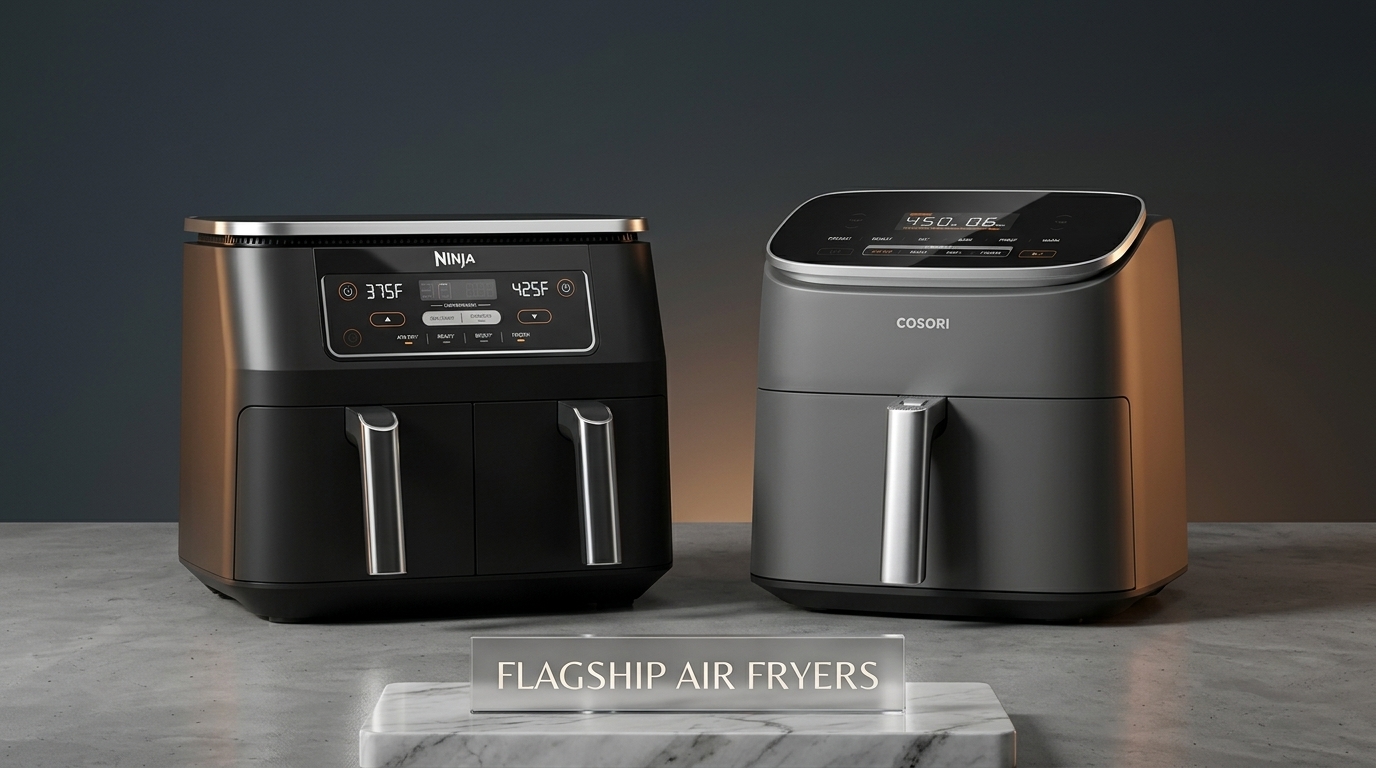
Ninja is the better air fryer for most cooks, mainly because of its stronger cooking performance, higher maximum temperature of up to 450°F and faster cooking. Instant models typically top out at 400°F and cook slightly slower, but they cost less and bring useful extras such as viewing windows and odor-control technology. In practice, that means Ninja suits people who want crisp textures and big batches, while Instant suits anyone who wants dependable results without paying a premium. The right pick also depends on format: single basket, dual drawer or multicooker. Household size and whether you already own Instant Pot appliances matter just as much.
The key distinction is heat and speed against price and convenience. Ninja’s extra headroom helps with browning and crisping, especially when the basket is full. Instant’s gentler ceiling is still plenty for fries, wings and vegetables, and its design touches can make everyday cooking more pleasant. Both brands sell compact single-basket units, dual-zone models and larger multi-function machines, so comparing like for like is essential. The sections below match specific models and use cases, so you can see where each brand genuinely pulls ahead and where the gap barely matters.
Is Ninja or Instant the Better Air Fryer?
Ninja is the better air fryer overall, winning on cooking performance, design and ease of use, while Instant is the cheaper option and the better value. Both brands crisp single items well, so the gap shows mainly with larger batches. Ninja’s larger basket and higher airflow give more even crisping when food is piled in. Its maximum temperature of 450°F, versus typically 400°F on Instant, also helps when you want deeper browning or a faster finish on thicker cuts. That advantage matters most to people who cook for several mouths or who care a lot about texture rather than simply reheating leftovers.
Instant earns its place for different reasons. It costs less, and some models add viewing windows so you can check food without opening the drawer. Odor-control technology is another differentiator, helpful in small or open-plan kitchens where cooking smells linger. Families will usually prefer Ninja for capacity and performance, whereas singles, couples and existing Instant Pot owners often get more from Instant’s lower price and ecosystem fit. The slightly slower cooking is rarely a dealbreaker for smaller portions, so the decision comes down to budget, batch size and how much crispness you demand.
How Do Ninja and Instant Air Fryers Compare Head to Head?
Head to head, Ninja leads on temperature range, speed and capacity, while Instant counters with lower prices and convenience features. The table below summarizes the main differences between the brands in general terms, based on typical models rather than any single machine. One concrete capacity example is the Instant Pot Vortex 6-quart, which offers less cooking space than the comparable Ninja and suits compact everyday use. If you regularly cook for more than two people, that smaller space can mean cooking in rounds, which cancels out some of the savings.
Temperature is the clearest numeric gap: Ninja goes up to 450°F, whereas Instant generally stops at 400°F. That extra 50°F can shorten cooking and sharpen browning. The remaining rows reflect broader tendencies, such as Ninja’s edge in design and ease of use and Instant’s edge in price. Treat the table as a starting point, because individual models within each brand differ in capacity, layout and features. The three subsections that follow look at performance, daily usability and cost in more detail before the guide turns to specific formats.
| Feature | Ninja | Instant |
|---|---|---|
| Max temperature | Up to 450°F | Up to 400°F |
| Speed | Faster | Slightly slower |
| Price | Higher | Lower |
Cooking Performance, Temperature and Speed
Ninja cooks hotter and faster, reaching up to 450°F, while Instant typically maxes out at 400°F and cooks slightly slower. The higher ceiling lets Ninja crisp and brown more aggressively, which is especially useful for frozen foods, wings and larger batches that would otherwise steam in a crowded basket. Instant still produces good results at its lower maximum, particularly with single items and moderate portions, but you may add a few minutes or work in smaller loads. Both brands handle everyday jobs like fries, vegetables and reheating well, so the difference is one of degree rather than a clear failure.
Preheating varies within Ninja’s range. The Ninja Speedi takes 8-9 minutes to preheat, so it is the slower starter of the family. Other Ninja air fryers, including the DoubleStack and the Foodi Dual Zone, heat up instantly, which keeps total time short for quick weeknight meals. If speed is your priority, check whether your chosen model needs a preheat before comparing it with an Instant. Because Instant cooks slightly slower, a fast-heating Ninja usually has the clearest time advantage, while the gap narrows against a model that needs warming up first.
Design, Usability and Cleaning
Instant tends to have the more intuitive controls, while Ninja generally wins on overall design and ease of use. The Instant Vortex Plus Dual was found easier to navigate than the Ninja. Clear menus, sensible presets and a logical layout matter more day to day than raw specifications, especially when you cook several different foods through a week. Basket and drawer design also affects daily use, from how easily you can shake food to how stable the handle feels when you lift it. Instant adds viewing windows on some models, letting you monitor browning without pulling the drawer and interrupting the cooking cycle.
Cleaning favors Instant slightly. Instant Pot parts are explicitly dishwasher-safe, which saves effort after greasy foods like wings or breaded chicken. Ninja’s nonstick parts are easy to clean by hand, but they may need hand washing, and gentle care helps the coating last longer. If you cook often, a dishwasher-safe basket can feel like a real convenience, while a quick wipe-down suits lighter users just as well. Check the manual for your exact model before putting any part in the dishwasher, since care instructions can differ between products.
Odor-control technology is another Instant usability feature. It is designed to cut cooking smells, which helps in small kitchens, flats and open-plan homes. Ninja counters with design polish and straightforward operation, so neither brand is hard to learn, and most people will be cooking confidently after a few uses. Recipe presets and instructions are worth comparing in the store or the product listing, because they shorten the learning curve for beginners. In short, pick Instant for intuitive controls, windows and dishwasher convenience, and pick Ninja if build, layout and ease of use matter more.
Price and Value: Which Is More Affordable?
Instant is the more affordable brand and the better value for money overall. Its most affordable air fryer, the everyday model, costs £59.99 in the UK before any sale. That entry price makes Instant an easy choice for first-time buyers, students or anyone who wants to try air frying without a large commitment. Ninja models generally sit higher, reflecting their stronger performance, larger capacity and design refinements. The question is whether those strengths matter enough in your kitchen to justify spending more than the basic Instant price.
Value is not the same as the lowest price. A cheaper machine that cooks slightly slower may still be the better buy for light, occasional use. For a couple reheating leftovers and cooking vegetables, Instant’s performance is more than adequate, and the savings can go toward ingredients or accessories. Dishwasher-safe parts and features such as viewing windows add practical worth that does not show up on the price tag. Those extras shift the value equation further toward Instant for modest households that cook simple meals.
Ninja’s premium buys capacity, speed and a higher temperature ceiling of up to 450°F. These benefits are most noticeable if you cook large batches regularly. A family that would otherwise cook in two or three rounds in a smaller Instant could save considerable time with a larger Ninja basket. Heavy users also tend to appreciate the more even crisping, which reduces the temptation to shake and rotate food repeatedly. In that scenario, the higher price spreads across many meals and can feel justified over the years you own the appliance.
Prices also move with sales, so the figure quoted for any model is a starting point rather than a fixed cost. The £59.99 UK price is the standard price before discounts. Compare models of similar capacity and format rather than the cheapest against the most expensive, since a dual-zone machine will always cost more than a basic basket. Think about what you will actually cook, how many people you feed and how much counter space you have before deciding. Matching the machine to your habits is the surest way to get good value, whichever brand ends up on your counter.
Which Single-Basket Air Fryer Is Best: Ninja or Instant?
The Ninja Air Fryer Pro is the best single-basket pick for versatility and crisping, while the Instant Essentials is the better budget and space-saving choice. Ninja Pro offers better performance and versatility, which suits cooks who want one machine to handle many jobs with reliably crisp results. The Instant Essentials is a solid choice for single professionals or students, and it fits very tight counters and tighter budgets without much compromise for light use. Choosing between them comes down to whether you value capability or compactness and cost more.
Think of the two as serving different priorities rather than competing head on. Ninja Pro rewards frequent cooking with stronger crisping and more flexibility. Instant Essentials rewards simplicity: it takes up little room and handles everyday basics such as fries, vegetables and reheating well. If you cook for one or two and rarely prepare large batches, the smaller Instant is hard to fault. If the air fryer will become your main appliance, Ninja Pro’s extra performance is worth considering.
- Ninja Air Fryer Pro: top pick for versatility and crisping
- Instant Essentials: budget-friendly, compact for limited counter space
Which Dual-Drawer Air Fryer Is Best: Ninja or Instant?
The Ninja Double Stack is the best dual-drawer pick, edging ahead on capacity, design and speed, while the Instant Vortex Dual Plus has a slightly smaller capacity but the same dual-zone technology. Dual-zone models let you cook two foods at once, with independent settings in each zone and a synchronized finish so both are ready together. The Ninja Foodi DualZone, for example, has two independent 4-quart cooking zones, each with its own basket. That makes it easy to pair a protein with a side without flavors mixing or one dish overcooking while the other finishes.
The Instant Vortex Dual Plus stands out for viewing windows and intuitive controls, which make monitoring and adjusting two zones simpler. Its trade-off is the smaller capacity, which matters when feeding larger groups or cooking bulky items like whole pieces of meat. The Double Stack wins on design and speed, and its extra space makes it the better choice for families who want to cook full meals in one go. The table gives a quick view of how each model fits.
Both approaches solve the same problem: cooking a main and a side without waiting. The difference lies in capacity, layout and day-to-day handling. Because the Instant offers the same dual-zone technology, you are not giving up the basic function by choosing it, only some space and speed. That makes it a sensible option for couples and small households that want dual zones at a lower cost. Larger households should lean toward the Ninja, where extra capacity prevents repeat batches.
| Model | Strength |
|---|---|
| Ninja Double Stack | Capacity, design, speed |
| Instant Vortex Dual Plus | Viewing windows, intuitive controls |
Is a Single Chamber with Zones Better Than Two Drawers?
A single chamber with zones is better for flexible capacity and large items, while two drawers are better for keeping foods fully separate. The Instant VersaZone is the example of the single-chamber approach. It gives you one large cooking space that can be divided, so bulky food fits more easily than in a smaller individual basket. Two independent baskets, by contrast, isolate flavors and temperatures completely, which suits cooks who prepare very different foods side by side. The choice depends on whether you value adaptable space or strict separation.
Ninja’s DoubleStack takes a third route with two-tier baskets that cook up to four ingredients simultaneously, stacking the space vertically. That layout suits busy households wanting several components of a meal ready together without spreading across a wide footprint. Singles and couples who occasionally cook large items may prefer the VersaZone’s flexible chamber and lower price. Families cooking multiple dishes at once will likely find the independent baskets or stacked tiers more practical.
Which Brand Is Better for Multicooker and Extra Functions?
Ninja is the better choice for multicooker versatility, led by the Ninja Combi, which offers enormous capacity and twelve cooking functions, from roasting to air frying. That breadth lets one appliance replace several, which is valuable if you want to consolidate gadgets or cook full meals in a single machine. The Combi suits larger households and enthusiastic home cooks who will actually use many of its modes. If you only air fry, those extra functions are unnecessary and add cost.
Instant appeals to a different kind of buyer. People already invested in the Instant Pot ecosystem often prefer to stay with a familiar brand. They prioritize affordability and flexible single-chamber capacity, as in models like the VersaZone, rather than the largest possible function list. This approach works well for those who already own a pressure cooker and simply want a capable air fryer to complement it. Their familiarity with Instant’s controls and accessories can also shorten the learning curve.
Deciding comes down to how many roles you want one appliance to fill. Ninja’s multi-function machines make sense for a one-device kitchen. Instant’s lower prices make sense when the air fryer is a supplement to equipment you already own. Extra functions only add value if you will use them regularly, so be honest about your cooking habits. For most people who mainly air fry, a dedicated model from either brand will be simpler and cheaper than a full multicooker.
Which Is Better for Your Household: Families, Couples or Singles?
Ninja is better for families, while Instant is better for singles, couples and Instant Pot owners. Capacity is the main reason: a 5 QT Ninja basket handles larger portions and batch cooking better than the 2 QT Instant Pot mini. Families also benefit from Ninja’s dehydrating function and independent temperature zones, which allow several items to cook at different settings at the same time. That flexibility reduces cooking rounds during busy evenings. A bigger basket also means less overcrowding, which supports more even crisping.
For small kitchens, the Instant Pot Vortex 2QT mini is more compact and easier to store, a real benefit when cupboard and counter space are limited. Singles and couples often cook modest portions, so they gain little from a large basket while paying more for it. Instant’s affordability, easy cleaning and compact single-chamber sizing fit that pattern well. Existing Instant Pot owners also benefit from ecosystem fit, keeping their kitchen brand consistent.
Think about your most common meal rather than your biggest occasional one. If you cook for four or more most nights, capacity should lead your choice. If you cook for one or two, space, price and cleaning convenience matter more. Dehydrating is a niche need, so only count it if you will use it. Matching size to routine prevents paying for unused capacity or fighting an undersized basket.
- Families: Ninja capacity, dehydrating, independent zones
- Singles and couples: Instant affordability, easy cleaning, compact sizing
- Instant Pot owners: ecosystem fit
Are Ninja and Instant Air Fryers Safe and Non-Toxic?
Safety and toxicity depend on the specific model, mainly its nonstick coating, so confirm coating details in each model’s specifications before buying. Nonstick surfaces are the usual concern, which is why checking the product listing or manual for coating information is the most reliable step. Ninja offers more non-toxic air fryer models, including small, large and multi-functional options, giving buyers more choice within that category. Instant has one non-toxic air fryer, described as a great one, so options are narrower.
Ventilation and smell are separate practical matters. Some Instant models include odor-control technology, which helps reduce cooking smells during use. As with most new appliances, a first-use odor can occur, so run the machine in a well-ventilated space and follow the manual’s setup guidance. Keep the unit with open space around it so hot air can escape properly. If avoiding certain coatings is important, shortlist models that clearly state their materials and choose from those.
Is Ninja Worth the Extra Money?
Ninja is worth the extra money if you cook often, for larger groups, or care about crisp results, because its premium is justified by a 450°F maximum temperature and faster cooking. Instant models typically stop at 400°F and cook slightly slower, so the difference shows up in browning, speed and how well big batches finish. Ninja also leads on design and ease of use, and its larger baskets and higher airflow give more even crisping. For heavy users, those gains accumulate across every meal.
It is less compelling for light users. Singles and couples cooking small portions may never exploit Ninja’s capacity or heat ceiling. Instant’s lower price, dishwasher-safe parts and viewing windows can deliver a better overall experience for them, with performance that is still solid. The slightly slower cooking is a small inconvenience when portions are modest. In that situation, the savings are real and the performance gap is hard to notice.
A simple rule helps: pay more for Ninja when capacity, speed and texture are your priorities, and choose Instant when budget, storage space and convenience matter most. Match the format too, whether single basket, dual drawer or multicooker, since the best model differs in each category. Compare specific models at similar capacity before buying so you judge the real difference. Either brand can serve a kitchen well when the machine matches how you actually cook.
